Monday, April 7, 2014

Looking Upwards to Increase Happiness, and Calmness


We have all learned to cast our gaze downwards habitually for unfortunate reasons. I used to look at the floor every time I spoke to people. I would do it after I finished a sentence, or after the other person did. In fact, I would actually look at the ground around my feet for most of the conversation. Looking down is a submissive social signal that communicates politeness at best and inferiority at worst. Sadly, we all do this all the time, even when we are not in social situations. When we are by ourselves we often simulate social situations in our head and we end up looking down even when no one else is around. Looking down is probably associated neurologically with depression and anxiety through numerous neurological pathways. Our nervous systems are used to looking down, this means that even when we are sleeping we are looking down. In our waking life and even in our dreams we have programmed ourselves not to look up, stifling our happiness and well-being.  In order to overcome it there are two main things that we can do: 1) we can become accustomed to looking straight or looking up more often, 2) we can build the ocular muscles responsible for lifting the eyes.

There is a great way to determine if the eye muscles responsible for looking up have atrophied due to disuse. Use your index fingers to press the eyelids and eyelashes down, pinning them against the top of the cheek. You want to refrain from squinting, so purse the eyelids “wide shut.” Next look up with the eyes. Look all the way upward, straight up, up and to the left, and up and to the right. If this hurts, or feels uncomfortable to your eye muscles then you know that they are relatively weakened. The only way to strengthen them is to look up more often and to do this exercise.

Try to stop looking down when you talk to people. Try looking straight, even when not making eye contact. Then try looking upwards, above the eye line when in a conversation. You might be concerned that the other person will get puzzled or even angry. If you are not used to looking up, not used to breathing deeply when doing it, or if your eye muscles are weak, it is likely that the other person will be able to tell that it is unnatural for you. The only way for it to look natural is for you to practice it habitually. Pretend that you are using the ceiling or sky as a canvass to paint pictures of the topic of conversation. Looking up appears natural when you use the upper visual field to imagine things in the mind’s eye.

The more you look up the better you will feel. If you can breathe deeply while doing this your body will learn to relax while looking up more quickly. Spend time every day looking up, or looking toward the right and left corners of your visual field.  Like looking up, looking to the far right and left sides keeps you from squinting which is also healthy and helpful. Another great way to make looking up natural and to strengthen your ocular muscles is to lie down in front of the TV with your head near the TV and your toes far from it. Watch a program or two upside down at the top of your visual field. Completely refrain from squinting while you do this. Go to the mirror afterwards, and you might just notice that your eyes look fuller, happier and calmer.


Here are some related book on happiness that have helped me:


Breathing Through Both the Nose and Mouth Simultaneously


I have pondered for a long time about the most salutary method of breathing. I have read sensible rationales for breathing in different ways, especially for breathing in through the nose and out through the mouth. For a while, I thought it was best to breathe in through the mouth and out through the nose because breathing out through the nose takes longer, and thus extends the exhalation relative to the inhalation, and must therefore activate the vagus nerve and parasympathetic nervous system (the resting branch). Now I prefer breathing in and out through both the nose and the mouth at once, allow me to explain how and why.
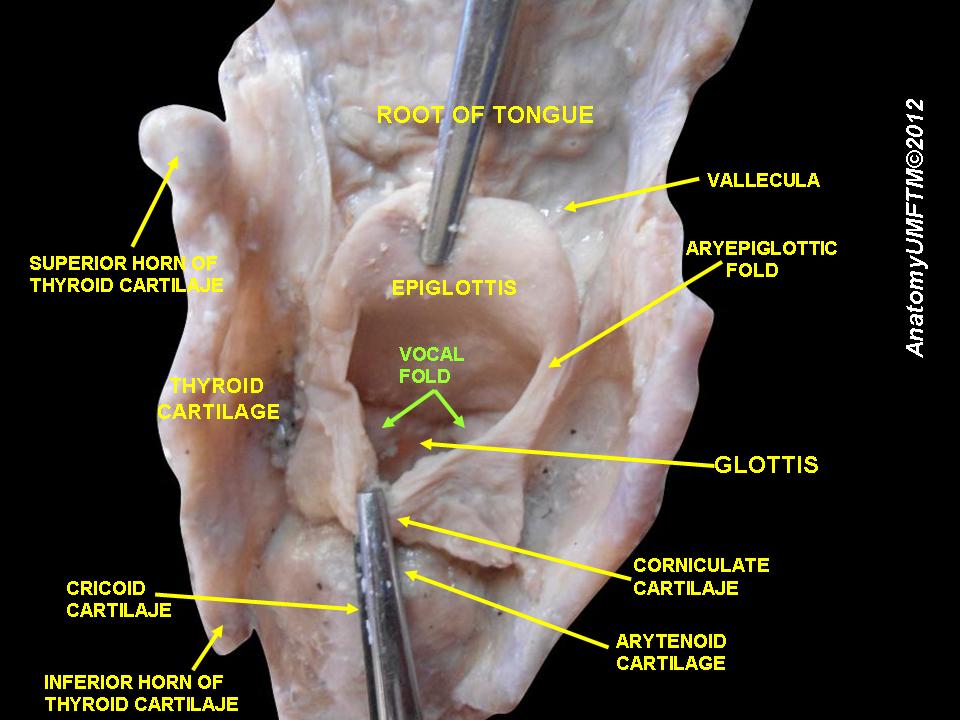
To do this, simply breathe in a way that you can feel air passing through both your nostrils and your teeth and lips. At first the only palpable sensations seem to come from these areas, but after a while you notice the pharyngeal structures in the back of the throat that are responsible for this kind of breathing. Not only do you learn how to control them, but you learn how to relax them. Usually when you breathe through your nose the passage way between your trachea and mouth is cut off by your uvula. Look in the mirror and open your mouth wide. When you look into the back of your throat you can see a fleshy, finger-like structure above the back of your tongue. Keep your eye on it and breathe through your nose. You will probably notice that the tongue rises up and obscures the uvula sealing off your mouth from the breath. Now practice breathing through the mouth and nose while keeping an eye on your uvula. It will feel unnatural at first, but keep at it.
 
When I breathe in through both nose and mouth it feels like I am relaxing muscles throughout my face, pharynx, and throat. While doing this, the tension in my nose and around my eyes dissipates. I think that the main reason why people don’t do this habitually is because we are afraid that we look strange to others while doing it. Your face goes dead and you look “too calm.” I believe though that after using this form of breathing over hours, days, and weeks, that the face changes subtly. Bags under the eyes disappear and the eyes look more open, “clear” and happy. Chronic inflammation from the fatigue of your facial muscles disappears, leaving you feeling and looking better. When I first started doing this it felt unnatural and it looked unnatural to others. Now it feels great and looks normal as well.

After you have practiced this for a few days you might notice that you can breathe through both the mouth and nose even when the mouth is closed. By this I mean you can breathe through the nose while still relaxing the pharynx, as if the mouth were open. I started doing this because I was influenced by Taoist and yoga breathing techniques such as ujjayi breathing where one tries to breathe using the back of the throat. Ujjayi breathing makes a hoarse sound and has been called “ocean breath” because it involves vibrating the glottis as air moves in and out. I think that breathing through the nose and mouth together teaches us how to breathe properly and captures the benefits of the ujjayi breath without the costs (glottis tension).

I believe that the most efficient and effective way of breathing is to breathe through both airways simultaneously, anything less than this, and you are handicapping yourself. I also believe that breathing through either one or the other is a form of social submission and expression of desperation used by mammals to communicate rank and fear. It seems clear to me that the more I keep this up, the calmer I look and feel.


To find out much more about diaphragmatic breathing click here to visit my Program Peace website at www.programpeace.com.

Expose Your Eyes to More Sunlight in Order to Feel More Positive


I recently started to expose myself to more sunlight in order to widen my eyes and improve my mood and affect. It really has worked, my eyes are wider, calmer and I feel better. I also squint less, especially when I am outside during the day. Living indoors we get a lot less sunlight than our ancestors and it has been shown that there is a huge relationship between depression and diminished exposure to the sun. Different forms of depression including seasonal affective disorder, common malaise and angst may be ameliorated by exposure to sunlight. Common forms of phototherapy have shown great promise but these usually use artificial light and do not address squinting, which I think plays a big causal role in negative affect. I think that squinting is tied neurologically to anxiety and depression and that if we can stop squinting, and have wider eyes we can live happier lives.

The only problem is when we are out in the sun, we squint heavily. I have tried to expose myself to just the right amount of indirect sunlight so that I can bask in it, wide-eyed, without squinting. I have worked up from here exposing myself to more and more sunlight without having to squint but every time I tried to expose my eyes to direct sunlight (not looking directly at the sun of course) I couldn’t help but to squint. The following is a great exercise that should allow you to tolerate more sunlight without squinting.

Allow yourself to sit or lie in the sun so that the sun’s rays enter into your eyes. You are not looking directly at the sun but your eyes are getting direct sunlight. This means that your skull and brow are not providing any shadow for your eyes. Close your eyes and breathe deeply for a few seconds to five minutes without squinting. Your eyes should be closed, top to bottom, with your lids “wide shut,” meaning that you are not squinting at all. You can even do this through your windshield or window at home to reduce your exposure to harmful rays. This practice will allow you to tolerate more sunlight and will improve the look of your eyes, making them feel and appear more healthy, calm and open.  

Wednesday, March 12, 2014

One Isometric Stretch to Improve Posture and Strength in the Chest, Neck and Shoulders


In my opinion the simple act of pushing the shoulders to the floor can remodel the upper body, making it easier to put on muscle and relieve tension and strain. We all walk around, sit, and sleep in our beds with raised shoulders. This is not the way our body was designed to hold itself and it introduces tension into the shoulder blades, neck and arms. This tension affects us in an adverse way psychologically. In Pilates they recommend pushing the ears away from the shoulders. In yoga it can be part of Tadasana or “mountain pose.” 

My favorite way to perform this isometric stretch is to lay on the floor:

1)      Lie down on the floor on your back and slightly tuck your shoulder blades underneath you.
2)      Put your arms at your sides, raise them to the level of your hips, and push down as if you were reaching for your knees.
3)      Do this for several seconds at a time breathing deeply.

It is really that simple. As long as you are breathing slowly and deeply your nervous system will start to embrace this posture. After a few sessions try walking around like this. With time you will notice that the muscles throughout your back and chest work together dynamically to push your shoulders down. It actually allows the chest and back to push against each other antagonistically. The more they can push against each other, the more they can coax each other to grow. Their synergistic relationship will even cause the base of the neck to become stronger and more healthy. This posture is the “core” of the upper body and it lends strength and poise to all upper body movements. It will help you grow stronger and help to improve your overall physique. 

Other poses that complement this one:

1)      Clasp the hands together behind the back, press the hands back and down and arch the chest upward and forward.
2)      Bend over reaching toward the ground with the hands clasped and arch the chest inward (backward, the other way) and hold.
3)      Simply raise the hands and arms above the head for a few minutes at a time while arching the chest inward, outward and laterally to each side.
4)      Stand straight with the elbows bent, press the elbows toward the ground and make small circles with the elbows as if you were flapping chicken wings.

I do these 4 exercises for prolonged periods while walking and together, over the course of a year they have changed my life.

Friday, December 13, 2013

Relieving Subvocal Tension in the Vocal Cords by Muting the Internal Monologue


The ultimate form of meditation, in my opinion, is to stop the restless subvocalization that is going on both within our head and within our larynx. The part of your brain that is responsible for speech is called Broca’s area and it is always active, running speech patterns. Sometimes its actions are not broadcast globally to the PFC and other association areas. When this happens we have a brief respite from being aware of our internal monologue. Usually however, not only is it broadcasting its speech to much of the cortex, but it is broadcasting instructions for speech to the supplementary motor areas, the premotor areas and the primary motor areas responsible for moving the vocal cords in the larynx.


I realized recently that I have no respite from muscular tension in my vocal tract and the tension extends out to my neck and head. Even though I am not speaking out loud, because I am talking to myself in my mind, my vocal tract remains tense, as if I was always speaking. This is a common cause of hoarseness and weakened/diminished voice. I try to stop the tension in my vocal tract, but I realize that in order to do this I have to mute my internal monologue. I can’t though. I am gradually learning to pay attention to how my constant internal monologue controls my subvocal tension, but I am rarely able to turn it off completely. My attention diverts from this meditative practice before I can effectively turn it off.

I am constantly tensing my throat, silently going through the motions of speech. Language is always running through my mind, whether it is me planning my day, me defending myself in a hypothetical argument, me predicting what someone else will say, or me singing the words to a song. Sometimes my mouth and tongue move with the words, sometimes they don’t, but always my throat mimes the words. It has been difficult for me to create respite from this interminable narrative.


I believe that what I have described is a malady that afflicts nearly everyone. I also think that people that practice advanced meditation focus on thinking without this internal dialogue. Surely it is helpful, without it we would only practice speaking when we are really speaking out loud to actual people. But I think that it afflicts us and we should all learn to subdue it temporarily at will. I think that the only way to do this is to: 1) become aware of it, 2) notice what it feels like to try to stop it, 3) practice subduing it for as long as possible. I think the best way is to try to subdue it from both ends: A) we can try to focus on the feeling and sensation of letting our vocal tract go completely limp and relaxed, and B) we can try to focus on the feeling and sensation of thinking without using words.


Here are some helpful books on similar topics that I have enjoyed: